
Western Sniper: Wild West FPS
CASUAL AZUR GAMESAction
4.311.44K Reviews
- Version
- 3.4.6
- Installs
- 50.00M
- Age Rating
- Teen
Screenshots
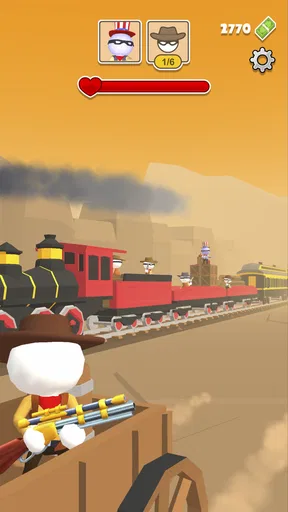
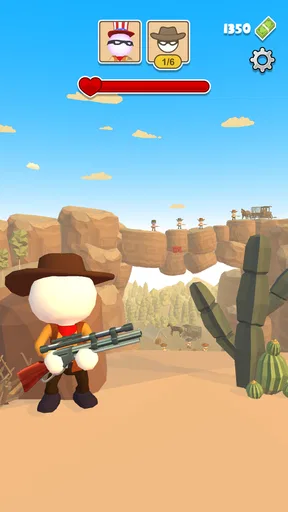
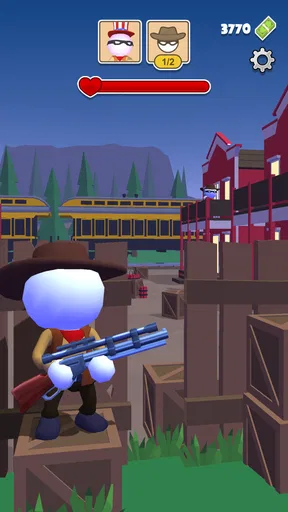
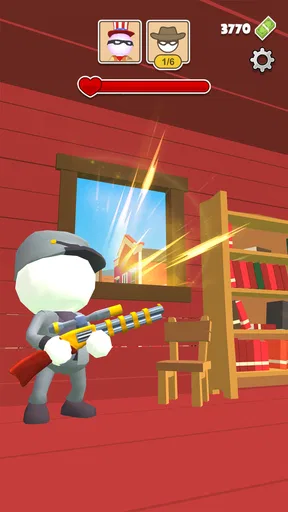
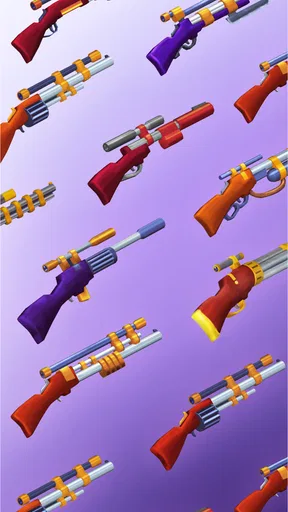
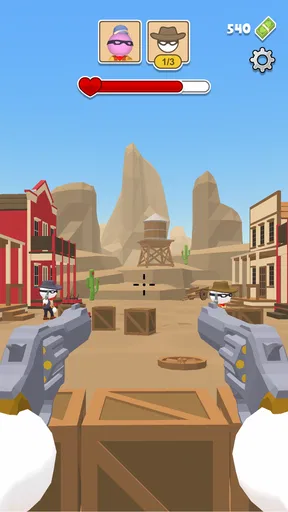
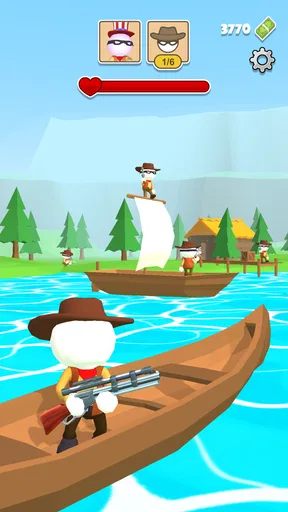
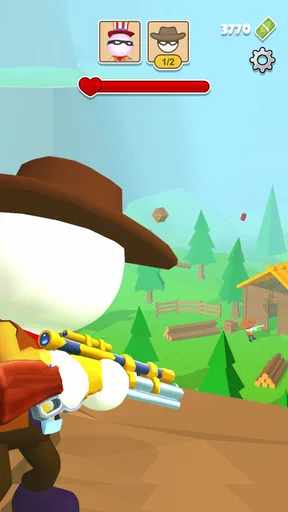
Our Review of Western Sniper: Wild West FPS
 Analysis by Appyee
Western Sniper: Wild West FPS is the kind of action game I can open for a short break and understand almost immediately. It puts me in the role of a frontier gunfighter, gives each encounter a clear target, and keeps the central task focused on careful shooting. That simplicity is its strongest first impression: I do not need a long tutorial or a complicated control scheme before the game starts feeling playable.
After spending time with it, I found that its appeal is less about building a huge western simulation and more about creating a compact shooting routine. The desert setting, wanted outlaws, dusty colors, and quick confrontations work together to make each session feel like a small scene from a light arcade western. The best reason to try it is its direct, pick-up-and-play rhythm, especially if you want action that can fit into a few spare minutes.
It is a free action game from CASUAL AZUR GAMES, with optional in-app purchases ranging from $0.49 to $7.49 per item. The game is rated Teen, runs on Android 6.0 or later, and its current version is 3.4.6. Its average rating is 4.3 from around 165 thousand ratings, while its reach has passed 50 million installs. Those figures suggest that the straightforward western-shooter idea has found a broad audience, but they do not change my main conclusion: this is best approached as an accessible arcade shooter rather than a deep first-person western adventure.
Why the first few sessions work so well
My first reaction was that the game wastes very little time getting to the point. The premise is easy to read: bandits are causing trouble, I take aim, and I try to stop them. That clarity matters on a phone, where a game often competes with messages, travel, or a short pause between tasks. I can play without first learning a large inventory, a complicated map, or a long chain of character upgrades.
The shooting perspective gives the action a more personal feel than a standard top-down blaster. I am looking through the weapon rather than watching a whole battlefield from above, so the moment of lining up a target carries most of the tension. The game does not need a large cast or a sprawling story to establish its purpose. A visible enemy, a western backdrop, and the need to fire at the right moment are enough to make the opening readable.
That accessibility also reveals the first limitation. Players who expect a full western campaign, open exploration, or a realistic firearms model may find the experience too narrow. The game is built around repeated shooting situations, not around wandering through a living frontier. I would recommend it to someone who enjoys compact mobile action, but I would point a fan of story-heavy shooters toward a larger alternative instead.
The free entry point makes testing the game easy. I can install it, play a few rounds, and decide whether the basic loop suits me without committing money first. The Teen rating also gives a useful indication of its intended tone: it presents outlaw action in a stylized game format rather than trying to become a serious historical western. I would still check the age suitability for a younger player because the central activity is gunplay, even though the presentation is designed around arcade entertainment.
A western built from visual signals
The setting communicates its identity through familiar frontier imagery rather than through dense world-building. Dusty spaces, rugged surroundings, outlaw targets, and the visual language of a gunslinger establish the mood quickly. I never need a long explanation to understand where the game wants me to imagine myself. The art direction is doing practical work: it separates the game from modern military shooters and makes the simple mission structure feel intentional.
What I like is the consistency between the setting and the playable task. A western sniper game would feel confused if it surrounded a precision shot with bright science-fiction effects or crowded military interfaces. Here, the frontier theme gives the act of waiting, aiming, and firing a recognizable dramatic shape. Even when a level is mechanically brief, the visual framing encourages me to treat it as a small showdown.
The trade-off is that the western identity is more atmospheric than expansive. I am not exploring a detailed town, studying a broad frontier economy, or making choices that reshape the setting. The world exists mainly to support the next encounter. That is not a flaw for a quick action game, but it is important to understand before downloading: the scenery creates context for the shooting rather than replacing it with exploration.
One useful way to enjoy the presentation is to pay attention to how the game directs my eyes. The environment is not merely decoration; it helps separate the target from the background and gives each shot a readable focal point. I found that I played more carefully when I treated the scene as a composition instead of immediately tapping at anything that moved. That small change in attention makes the shooting feel more deliberate without requiring a complicated control system.
How sound and pacing shape the mood
The game’s mood depends heavily on timing. A western shootout needs a moment of anticipation before the shot, followed by a quick release of tension. The compact structure supports that pattern well. I am not spending long periods crossing empty terrain before reaching the action. Instead, the game keeps returning me to the central beat of spotting danger, aiming, and reacting.
That rhythm makes it suitable for short sessions, but it also means the experience can become repetitive if I want constant mechanical growth. The same basic pleasure remains effective for a while because it is easy to understand and satisfying to repeat. Eventually, however, I may want more variation than another target-focused encounter can provide. This is where the game differs from larger action titles that use puzzles, exploration, stealth, or elaborate set pieces to refresh their pace.
The sound design contributes to the western mood by giving the shooting moments a sense of punctuation. In a game this focused, audio does not need to carry a large narrative; it needs to make the shot feel like an event. I found that playing with sound on made the timing more expressive, while playing silently reduced the sense of a frontier showdown and made the activity feel more like a basic tapping exercise.
For that reason, I would not judge the game only by the number of mechanical systems it contains. Its atmosphere comes from the relationship between visual framing, the pause before action, and the release after a successful hit. Western Sniper works best when I let the scene breathe for a moment instead of treating every encounter as a race. That approach improves the mood and also encourages more accurate play.
There is a practical use for this pacing. If I have only a short break while waiting for an appointment or commuting, I can play a few encounters without needing to remember a complicated objective. If I am looking for a long evening game with a constantly changing soundtrack of systems and story events, the same compact rhythm may feel too limited. The right choice depends less on the western theme alone and more on how much repetition I enjoy.
Where the shooting loop fits
The central mechanic is easy to describe but has more room for judgement than the store summary suggests. I need to identify the wanted bandit, line up the shot, and fire with enough control to complete the encounter. That creates a small decision point: rushing may feel efficient, but careful observation usually makes the situation easier to read. I enjoyed treating each target as a brief accuracy challenge rather than simply tapping as soon as possible.
This design is a good fit for touchscreens because it avoids asking the player to manage too many inputs at once. A virtual control layout can become frustrating when movement, aiming, reloading, abilities, and camera control all compete for space. Western Sniper keeps the focus narrow, which makes it approachable on a phone held in one hand or during a quick session. The downside is that players who enjoy expressive movement and advanced combat options may feel that their skill has fewer ways to show itself.
The most useful habit I developed was to separate observation from action. Before firing, I looked at the whole scene and considered whether the target was moving, exposed, or surrounded by visual distractions. This helped me avoid wasting attempts through impatience. It is a small technique, but it gives the simple loop a little more depth and makes successful shots feel earned rather than automatic.
Another trade-off appears in progression. A focused shooter can be satisfying without a huge upgrade tree, but long-term motivation often depends on how much the game changes the meaning of each encounter. If I am mainly seeking quick target practice with a western wrapper, the repetition is part of the charm. If I need a strong sense of character development, detailed weapon customization, or a campaign that keeps introducing new forms of play, I should choose a more feature-heavy action game.
The optional purchases are worth keeping in mind even though the game is free to start. I would play normally first rather than buying anything immediately, because the core question is whether the shooting rhythm itself holds my attention. Spending can make sense for a player who already enjoys the game and wants to support or extend the experience, but it does not solve the basic issue of repetition if the loop is not appealing in the first place.
Who should play it and who should pass
I think the strongest audience is made up of mobile players who like action with a clear objective and minimal setup. It suits someone who enjoys western imagery, short shooting challenges, and a game that can be understood quickly. It is also a reasonable choice for a player who finds larger first-person shooters too demanding on a touchscreen and wants something more focused.
It can work especially well as a break-time game. Imagine waiting for a train with only a few minutes available: I can open it, complete a handful of encounters, and put it away without losing track of a complex mission. The western presentation gives those short sessions more personality than an abstract target game, while the direct controls reduce the amount of preparation needed.
I would be more cautious recommending it to someone who wants competitive multiplayer, a substantial narrative, open-world travel, or realistic western history. Those expectations point toward different genres and larger productions. I would also skip it if repeated precision shooting quickly loses its appeal. The setting may attract me initially, but the mechanical loop remains the reason to stay.
Compared with endless runners, this game offers more deliberate attention and less emphasis on continuous movement. Compared with large mobile shooters, it removes much of the equipment management and battlefield complexity. Compared with puzzle games, it asks for visual timing and target recognition rather than planning several moves ahead. That middle position is useful: it feels more active than a casual puzzle but less demanding than a full competitive shooter.
The game’s broad popularity and 4.3 average rating show that its accessible formula resonates with many players, but I would not treat popularity as proof that it fits everyone. My own recommendation is conditional and fairly simple. Try it if the idea of a short, stylized western shooting loop sounds enjoyable. Pass if the western setting is only interesting to you when it comes with exploration, dialogue, survival systems, or a deep campaign.
Small habits that improve the experience
My first practical tip is to play with a stable grip and avoid making rushed taps. Because the action is centered on aiming, even a small change in how I hold the phone can affect my accuracy. I found that resting the device more securely made the visual alignment feel less erratic, especially during short sessions when I was tempted to play one-handed while distracted.
Second, I recommend using the environment as a visual guide rather than staring only at the weapon sight. Background shapes and contrasting areas can help me notice where a target is positioned. This is particularly useful when the scene contains several objects competing for attention. The game becomes more readable when I scan the whole frame first and then narrow my focus.
Third, I would avoid judging a session by speed alone. A fast completion is not automatically a better one if it comes from careless firing. Waiting for a clearer opportunity can make the encounter feel more like a western standoff and can reduce the frustration that comes from reacting before I understand the scene. That slower approach is also where the art direction and mechanics reinforce each other most effectively.
Finally, I would decide on purchases only after testing the free experience across several sessions. The listed item prices begin at $0.49 and reach $7.49, so the cost can remain modest or become more noticeable depending on how often I buy. My advice is to treat spending as optional support for a game I already enjoy, not as a shortcut to discovering whether its basic rhythm suits me.
The atmosphere verdict
Western Sniper: Wild West FPS succeeds because its parts point in the same direction. The frontier imagery gives the targets a recognizable context, the sound and timing help each shot feel like a small dramatic beat, and the focused controls keep the action comfortable on a phone. CASUAL AZUR GAMES has built a game that understands the value of a clear idea and does not bury it under unnecessary complexity.
That clarity comes with boundaries. The experience is not a substitute for an expansive western adventure or a deep tactical shooter, and its repeated structure may eventually test the patience of players who need constant novelty. Still, I consider that a fair trade for a game that starts quickly, communicates its mood immediately, and fits naturally into short sessions.
My final recommendation is to download it if you want a free, stylized action game built around compact sniper encounters and a coherent Wild West mood. It is at its best as a focused five-minute shooter, not as a complete frontier simulation. When I approach it with that expectation, the simple loop feels purposeful, the setting adds character, and the game earns its place among the easier mobile options for quick western-themed action.
Verdict
Strengths of Western Sniper: Wild West FPS
- Simple controls make aiming and shooting easy to learn.
- Short levels suit quick gaming sessions.
- Western-themed weapons and locations create a distinctive atmosphere.
- Offline play is useful when you have no internet connection.
- Upgrades provide a clear sense of progression.
Limitations of Western Sniper: Wild West FPS
- Frequent ads can interrupt the gameplay flow.
- Energy limits may restrict longer play sessions.
- Enemy behavior becomes predictable after repeated levels.
- Weapon upgrades can feel slow without optional spending.
- Graphics and animations are fairly basic on modern devices.
Other Releases by CASUAL AZUR GAMES
View All
Worms Zone .io - Hungry Snake
Action4.3

Stack Ball - Crash Platforms
Arcade4.5

STAR: Super Tricky Amazing Run
Arcade4.2

State.io — Conquer the World
Strategy4.1
Similar Picks in This Category
View All
Temple Run 2: Endless Escape
Imangi Studios4.1

PUBG MOBILE
Level Infinite4.3

Free Fire: 9th Anniversary
GARENA INTERNATIONAL I4.4

Talking Tom: Hero Dash Run
Outfit7 Limited4.3

slither.io
Lowtech Studios3.9

Sniper 3D:Gun Shooting Games
Wildlife Studios4.6
Frequently Asked Questions
What is Western Sniper: Wild West FPS?
Western Sniper: Wild West FPS is a casual shooting game set in a stylized Wild West. You play as a cowboy defending towns and facing outlaws, bandits, and other enemies from a first-person perspective. The main gameplay focuses on aiming, timing your shots, completing short missions, and upgrading your weapons as the difficulty gradually increases.
How do you play Western Sniper: Wild West FPS?
The controls are designed for mobile devices and are generally easy to understand. You move your aim across the screen, line up targets, and tap to fire when the shot is ready. Many stages involve eliminating enemies before they attack or escape. Accuracy and patience are important, since carefully timed headshots can make levels easier and help you progress more efficiently.
Does Western Sniper: Wild West FPS require an internet connection?
The game is primarily structured around short, self-contained shooting levels, so many players may be able to enjoy its core gameplay without a constant connection. However, internet access can still be required for advertisements, optional rewards, updates, analytics, or other online features. Requirements may vary by device and version, so it is best to check the store listing before downloading.
Is Western Sniper: Wild West FPS free to download and play?
Western Sniper: Wild West FPS is generally offered as a free download, allowing users to try the main shooting experience without paying upfront. Like many free mobile games, it may contain advertisements and optional in-app purchases. These purchases can potentially support progression or provide extra resources, but they are not necessarily required if you are comfortable playing at a slower pace.
Is Western Sniper: Wild West FPS suitable for children?
The game has a cartoon-like presentation, but its central theme is still first-person shooting involving firearms and enemies being defeated. Parents should review the age rating, store description, advertising content, and in-app purchase settings before allowing younger players to use it. The simple controls may be accessible to children, but the combat-focused gameplay may not be appropriate for every age group.
Play our best games!


